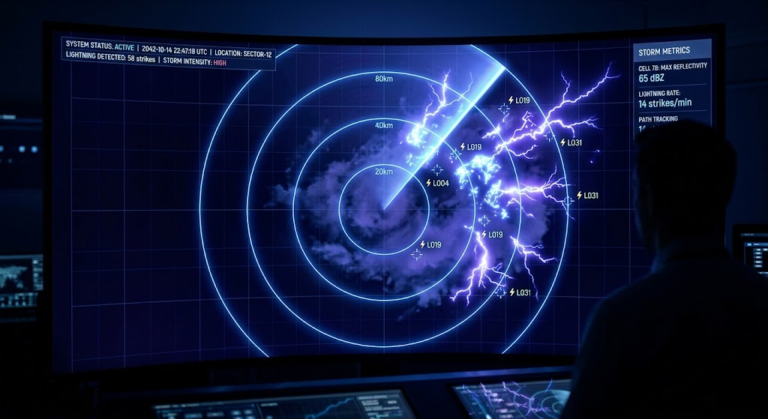
Why Schools Need Lightning Detectors
On May 6, 2015, two spectators at a soccer game were struck by lightning. In this particular case, these grandparents from Pocohontas High School in Henrico County, Virginia, were fortunate to survive the lightning strike.
Unfortunately, in the same year, Francois Clarence was not as fortunate when he was struck by lightning at his school. Francois, 17 years old, was playing field hockey at his school in Witbank, 125 km from Johannesburg, South Africa. He was struck directly by lightning while running across the playing field, and although he was taken immediately to the hospital, he tragically died a short time later.
In Washington, DC, several years ago, a lightning strike hit a crowd of students and adults watching a lacrosse game at St. Albans School. Ten people were seriously injured, and a 15-year-old boy lost his life.
Every year, when weather conditions include the threat of thunderstorms, lightning can strike schools or areas nearby, including outdoor athletic fields. Not every direct lightning strike results in death, but between 2006 and 2013, there were 29 fatal lightning incidents involving people participating in sports. These activities included soccer, baseball, and football.
Lightning Detectors in Schools
The importance of lightning detectors in schools located in areas where lightning is a danger is critical in preventing tragic events. Between 2006 and 2013, according to the National Weather Service, nearly 20% of lightning deaths involved high school students or even younger children. Many children and teenagers are not aware of the risks associated with thunderstorms and continue outdoor activities when a storm is approaching.
Even when supervised, school-age children, as well as spectators, may still be at risk when schools do not have proper detection systems in place. Every school should have a safety plan that includes policies and procedures for when a thunderstorm is nearby. Advanced alerts, provided by a permanently installed lightning detector, give school staff, coaches, and supervisors the knowledge they need to help prevent tragedy when students are participating in outdoor activities.
Every outdoor school event, including sports, practices, and games, should include at least one designated storm monitor who has the authority to postpone or cancel the event and instruct spectators to seek shelter when there is a risk of lightning.
The advantages of having a lightning detector such as the SkyScan Field-Pro include:
- Lightning distance detection (0–4.8, 4.8–12.8, 12.8–32, and 32–64 km)
- Visual alerts visible from dozens of meters away
- Horn alarms audible from nearly one kilometer away
- Dual-antenna technology for greater accuracy
Portable Lightning Detectors in Schools
Schools, including other educational institutions such as colleges and universities, should consider purchasing a portable lightning detector. Students are often taken on field trips where lightning detection systems are not available, even though the risk of a lightning strike may still exist. Outdoor activities such as camping, hiking, nature excursions, and similar programs are often organized through schools.
Those supervising these types of activities should be fully trained in safety and emergency procedures, including what to do when thunderstorms pose a risk. Supervisors should have clear safety procedures to follow when lightning is detected. A portable lightning detector can provide early warning and give supervisors enough time to direct students to safe shelter, reducing the risk of tragedy caused by lightning.
At SkyScan USA, we can help you choose the ideal lightning detector model for your school’s needs. During seasons when outdoor activities are common and lightning is a risk, make sure your students and everyone involved have the early warning they need to make good decisions and help prevent tragedy.
Reference
National Weather Service:
www.lightningsafety.noaa.gov/resources/RecentLightningDeaths.pdf